
Mine Waste Geochemistry & ML/ARD
Know how your waste will behave before you place it.
Metal leaching and acid rock drainage can dictate a mine's water management, closure plan and permit conditions for decades. We have characterized waste rock, tailings, ore and pit walls on projects across Canada, South America and Africa, from exploration through closure. Getting it wrong is expensive. Getting it late is worse.
Every program starts with your geology. We sample by geological, alteration and geometallurgical domain, and weight each domain by the tonnage it contributes to the mine plan. The dataset then represents what you will actually mine.
Static tests show what a material could do. Kinetic tests and mineralogy show how fast, and when. We read both against field conditions, including how much of the measured carbonate will actually neutralize acid and how long acid-generating rock will stay neutral. Both numbers shape your waste plan.
The output is built for decisions: classification criteria, segregation and placement rules, and source terms ready for water quality models, closure design and permit applications. Already have data? We review it against current guidance and specify only the testing that closes the gaps.
We work to the GARD Guide, MEND and provincial ML/ARD guidance. Reviewers see the framework they expect, and your program avoids the questions that stall approvals.
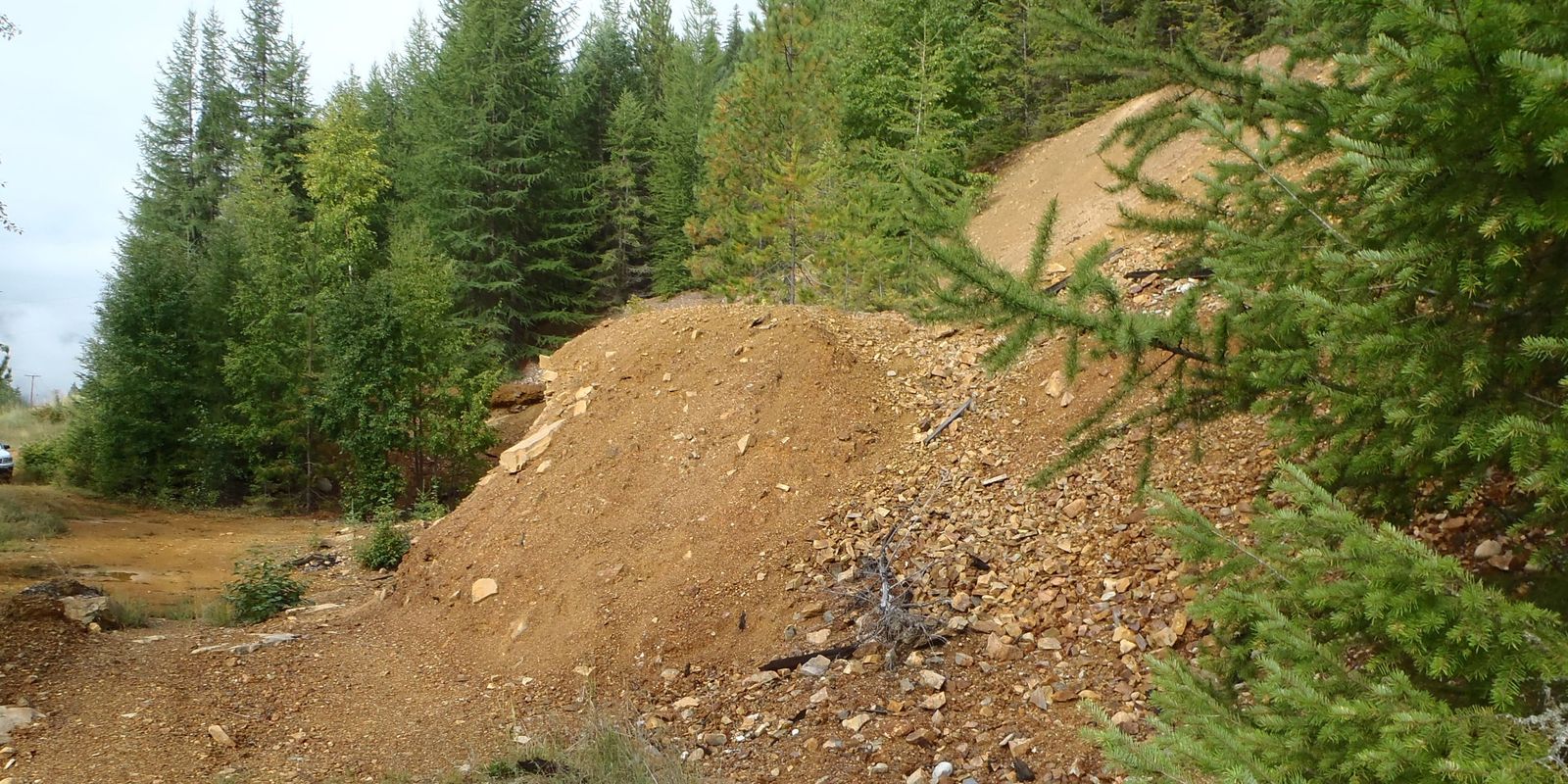 Oxidized waste rock dumpBritish Columbia · Mine Waste & ML/ARD
Our Services
Sampling and Analysis Plans
Sampling built on geological and geometallurgical domains, with sample numbers you can justify and QA/QC that survives review.
Static Testing and Classification
Acid–base accounting, NAG testing and sulphur and carbon speciation, turned into practical, site-specific classification criteria.
Kinetic Testing Programs
Humidity cells, columns, field barrels and test piles, designed, overseen and interpreted, with clear criteria for when a test has run long enough.
Mineralogical Interpretation
Reactive sulphides, effective carbonates and trace-element hosts tied to measured leaching. Predictions rest on mechanism.
Waste Segregation and Placement
Classification turned into operating rules, with field checks that prove segregation is working.
Source Terms and Gap Analysis
Test results converted into source terms for water quality models. Gaps in existing data found and closed with targeted testing.
Questions we help you answer
- Which materials can generate acid, and how much of the mine plan are they?
- Is the measured neutralization potential real, or inflated by iron and manganese carbonates?
- How long until acid-generating rock turns acidic in the field?
- What leaches at neutral pH, and how fast?
- When has a kinetic test run long enough?
- Will this dataset stand up in permitting?
Supporting your decisions
| Stage | Decision | DHT input |
|---|---|---|
| Exploration | Is ML/ARD a material project risk? | Drill-core screening by geological domain |
| Feasibility | Waste classification and segregation strategy | Static and kinetic programs, classification criteria |
| EA / permitting | Defensible source terms for effects prediction | Kinetic interpretation and documented scaling |
| Operations | Is segregation working? | Operational testing and verification |
| Closure | Cover and placement design for reactive materials | Long-term reactivity and lag-time estimates |
Related services
Collaborate with DHT
Tell us what you're facing. We'll tell you how we can help.