Critical Minerals from Mine Waste
Find the value in your mine waste.
Tailings, waste rock and process byproducts can hold rare earth elements, cobalt, nickel, lithium and other critical minerals. Grade alone doesn't decide whether they're worth recovering. Mineral hosts, grain size and associations decide whether the target elements can be released selectively.
Our research examines how geochemical characterization, bioleaching and biohydrometallurgical processes, and co-extraction can recover these elements from mine waste. Bioleaching uses microbially driven oxidation and acid or ligand generation to mobilize target metals under controlled conditions, potentially with lower energy and reagent demand than conventional processing.
Recovery and environmental performance are assessed together. A process that pulls out value but leaves a more reactive residue hasn't reduced your liability. So residue leaching is tested alongside recovery from the first experiment.
Many candidate materials already have ML/ARD data, which makes existing datasets the fastest place to start screening. We run this work with academic and industry partners under structured study designs and laboratory protocols, and help partners frame proposals for Canadian funding programs.
For mine owners, it is a new way to look at existing tailings and waste facilities: as possible sources of value that can also cut long-term environmental liability. Some of that value may already be stockpiled on your site.
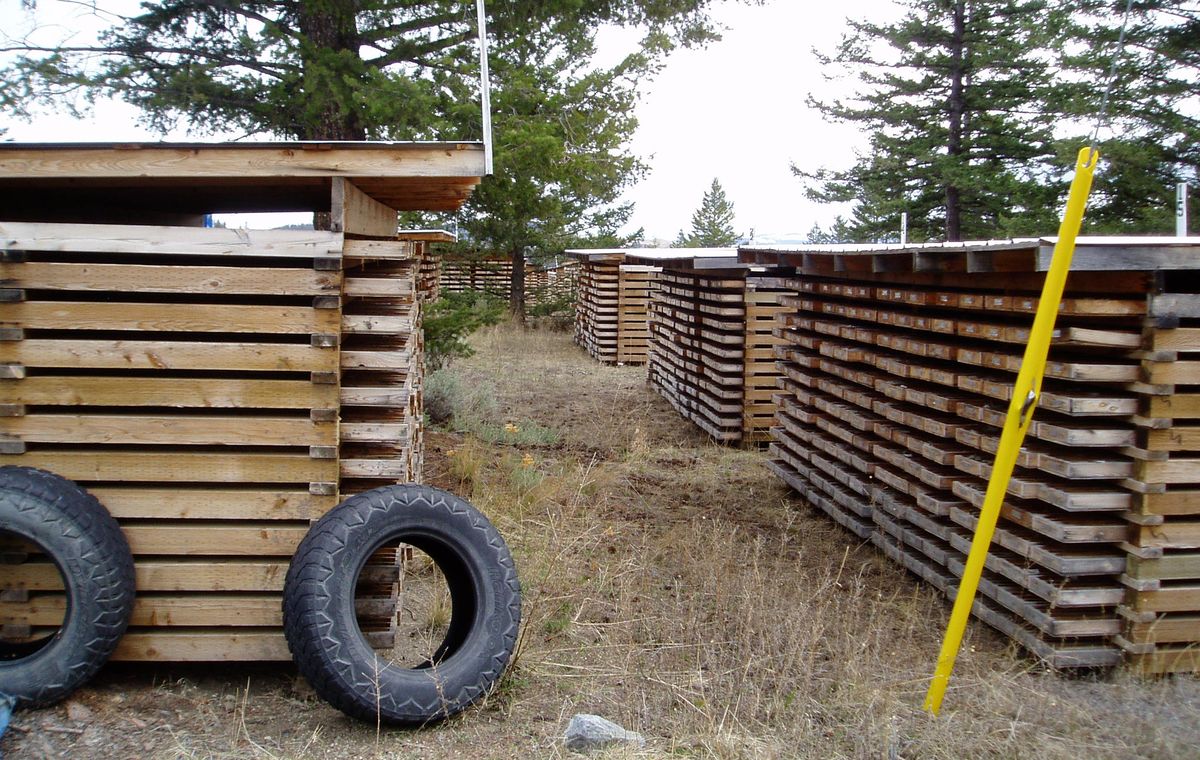 Drill core storageBritish Columbia · Critical Minerals from Mine Waste
Our Services
Critical Mineral Screening
Tailings, waste rock and byproducts screened for critical-mineral potential, starting from the geochemical data you already hold.
Mineral Host and Deportment Characterization
Which minerals host the target elements, and how they're associated. These factors decide whether recovery is practical.
Bioleaching Study Design
Bioleaching and biohydrometallurgical studies with clear objectives, controls and measures of success.
Co-Extraction Concepts
Ways to recover critical minerals alongside existing processing or remediation.
Residue Leaching Assessment
How recovery changes the residue's leaching behaviour, so recovering value also reduces liability.
Research Partnerships and Proposals
Research programs and funding proposals built with university and industry partners.
Questions we help you answer
- Which waste streams hold recoverable critical minerals, and in what mineral hosts?
- Can the target elements be mobilized selectively?
- Does recovery lower or raise the residue's leaching risk?
- How would recovery fit with the existing closure plan?
Supporting your decisions
| Stage | Decision | DHT input |
|---|---|---|
| Screening | Which materials warrant further study | Inventory and grade screening |
| Characterization | Recovery potential by mineral host | Mineralogy and deportment interpretation |
| Laboratory | Process viability and residue chemistry | Study design and leach testing |
| Scale-up | Readiness for larger-scale evaluation | Integrated recovery and residue assessment |
| Closure integration | Effect of recovery on closure liability | Residue classification and closure inputs |
Related services
Collaborate with DHT
Tell us what you're facing. We'll tell you how we can help.